Wireless Earbuds
True wireless earbuds are the most crowded category in audio, full of identical-looking listings and inflated claims. These guides sort the proven picks from the gambles — by fit, real battery life, water resistance, and call quality.
JLab Go Sport+ Review: Budget Hooks, Clear Tradeoffs
The JLab Go Sport+ makes sense if you want inexpensive workout earbuds with earhooks and do not need active noise cancellation. The hooks add support, but silicone tips still sit inside your ears. Choose it for that combination rather than expecting open-ear comfort or a quiet gym. This assessment uses manufacturer specifications and design tradeoffs, not hands-on testing.
Read full
Soundcore Sport X20 vs JBL Endurance Peak 3: Which One?
Start with the Soundcore Sport X20 if you want adjustable ear hooks and active noise cancelling in one pair. Consider the JBL Endurance Peak 3 if you prefer its bendable wraparound fit and do not need ANC. Both use in-ear tips, so comfort depends on the seal as well as the hook. Compare current offers before deciding: the extra features do not always come with the higher price.
Read full
Best Earhook Earbuds: 3 Picks for a More Secure Fit
The Soundcore Sport X20 is our first choice if you want adjustable ear hooks and noise cancelling. Choose the JBL Endurance Peak 3 if you prefer its wraparound fit and do not need ANC, or the JLab Go Sport+ if keeping the cost down matters most. All three use in-ear tips: a hook helps hold an earbud in place, but it does not remove the need for a comfortable seal.
Read fullSkullcandy Dime 3 Review: Small, Cheap and Findable
The Skullcandy Dime 3 is one of the smallest and cheapest pairs of earbuds from a well-known brand, and it has two features almost nothing else at its price offers: built-in Tile tracking to find lost earbuds, and multipoint to stay connected to two devices. It gives up noise cancelling, a long battery and an app with a real equaliser. This review is about who that trade suits, and how it compares with the other cheap earbuds people usually consider.
Read full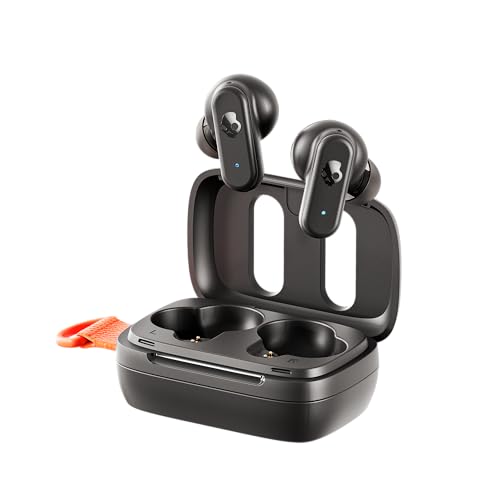
EarFun Air Pro 4 vs Nothing Ear (a): Specs vs Style
These are two of the most recommended noise-cancelling earbuds under $100, and they arrive from opposite directions. The EarFun Air Pro 4 is a spec sheet: longer battery, more codecs, wireless charging, a better water rating, for less money. The Nothing Ear (a) is a design: the transparent look, a polished app and a brand people choose on purpose. Both cancel noise well and both have six microphones. This comparison sets out exactly where they differ, so you can decide which side of that trade matters to you.
Read full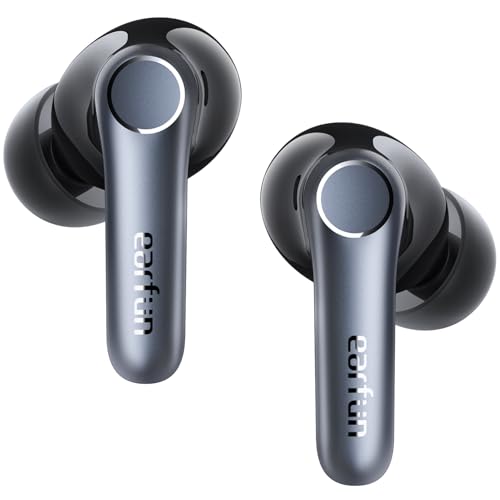
Nothing Ear (a) Review: ANC Battery and Dual Connection
Ear (a) suits a two-device routine with ANC when its uninterrupted runtime fits your day. Nothing quotes shorter times for calls than music, and ANC reduces both. Check Dual Connection behavior, LDAC settings and the lack of wireless case charging.
Read full
Shokz OpenDots ONE Review: What a Clip-On Fit Changes
The Shokz OpenDots ONE are open-ear earbuds that clip onto the edge of your ear rather than sitting inside it or hooking over the top. Nothing blocks the ear canal, so you hear the world around you while you listen. That makes them a specific tool rather than a general upgrade: very good for runners, cyclists, office workers who need to hear colleagues, and glasses wearers, and a poor fit for anyone who wants to shut noise out. This review is about who should buy them and what the clip-on design changes.
Read full
Sony WI-C100 Review: Why a Neckband Still Makes Sense
The Sony WI-C100 is a neckband: two earbuds joined by a flexible band that sits around your neck. That design is out of fashion, and for a lot of people it is still the more practical one — the earbuds cannot be lost separately, there is no case to forget, and the battery lasts for days. This review is about who the WI-C100 suits, what Sony adds at this price, and what you give up by not buying true wireless earbuds.
Read full
EarFun Air Pro 4 Review: Battery Modes and Codec Limits
The original Air Pro 4 offers ANC, multipoint and several codecs, but not every feature works together. Compare the four battery modes, check your source device and choose between LDAC and dual-device use before buying.
Read fullJBL Tune Buds Review: Big-Brand ANC on a Budget
The JBL Tune Buds are the cheapest noise-cancelling earbuds from a brand most people already know, and they are frequently discounted well below their list price. They do the expected things — cancelling, an ambient mode, an app, a long battery — without a standout feature. The question this review answers is whether the JBL name and a sale price are enough when Soundcore, EarFun and others sell similar specifications for similar money.
Read full
Beats Solo Buds Review: The Case Has No Battery
The Beats Solo Buds are Apple's cheapest route into Beats earbuds, and they get there by leaving things out. There is no noise cancelling, no transparency mode, and — the part most buyers do not notice until the box is open — no battery in the charging case. What they keep is a long battery in the earbuds themselves, one-touch pairing on both iPhone and Android, and a very small case. This review is about whether that trade makes sense at around $70.
Read full
Best Noise Cancelling Earbuds Under $30 (2026)
Thirty dollars is roughly the floor for earbuds with genuine active noise cancelling — below it, most listings advertising 'noise cancelling' mean a microphone that cleans up your voice on calls, not earbuds that quiet the room. These four do the real thing, and they are ranked on how strongly they cancel, how long they last with cancelling switched on, and how well owners rate them.
Read full
Soundcore P31i Review: Is the Upgrade Over P30i Worth It?
Anker's cheap earbuds have become the default answer to 'what should I buy for under $50', and the P31i is the newest step in that line. It sits above the P30i in the range and adds three things on paper: cancelling that adjusts itself, LDAC hi-res audio, and real-time translation. This review is about which of those justify the extra money, and for whom — because for a lot of buyers, the cheaper pair is still the right one.
Read full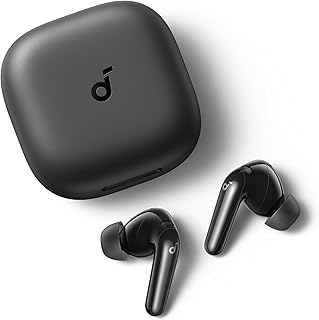
Raycon Everyday Earbuds Review: Features and Value
You have almost certainly heard about Raycon. The brand built itself on podcast and influencer advertising at a scale few audio companies match, which means most people meet the Everyday earbuds through an ad read rather than a spec sheet. That makes the honest question harder to answer and more worth asking: at the current price, how much of this is the product and how much is the marketing? This review looks at what the Everyday actually gives you, and where that leaves it against earbuds that don't advertise.
Read full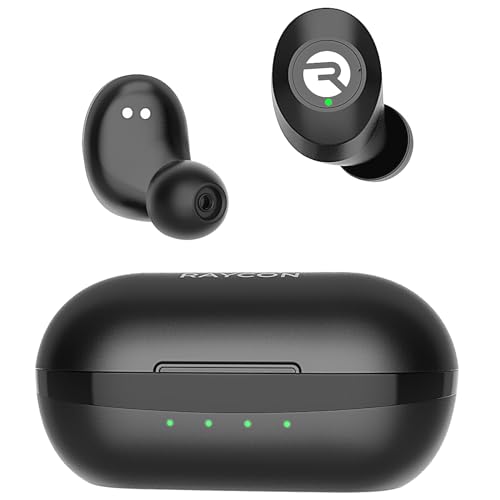
Nothing Ear (a) vs CMF Buds Pro 2: Brand vs Sub-Brand
This is a rare comparison where a brand competes with itself. The Nothing Ear (a) is Nothing's affordable earbud at $79; the CMF Buds Pro 2 is made by CMF, Nothing's own budget sub-brand, at $49. On paper the cheaper one wins more rows than it should — higher ANC figure, dual drivers, a physical control dial — which raises an honest question: does the extra thirty dollars for the parent brand buy anything real, or does the sub-brand quietly beat it?
Read fullBest Noise Cancelling Earbuds Under $100 (2026)
Under $100 is the sweet spot for noise-cancelling earbuds. Below $50 you get real cancellation with a few corners cut; above $100 you're paying for polish rather than the feature itself. In this bracket the corners mostly disappear: adaptive ANC rated to 50dB, hi-res Android codecs, multipoint and app EQ all show up for well under a hundred dollars. These five span the whole range from $27 to $99, and each earns its place for a different reason — so the pick depends less on which is best and more on what you actually want.
Read full
EarFun Air Pro 4 vs CMF Buds Pro 2: Budget ANC
Budget noise-cancelling earbuds used to mean settling. These two don't. The EarFun Air Pro 4 and the CMF Buds Pro 2 both quote 50dB of adaptive cancellation, both do multipoint, both support hi-res Android codecs, and both cost around fifty dollars — a specification that would have been flagship money a couple of years ago. They're close enough that the decision comes down to a handful of specific differences rather than one being better than the other, so this compares them on exactly those.
Read full
Best Noise Cancelling Earbuds Under $50 (2026)
An earbud has less room than a headphone for a cancellation chip, a battery and microphones, so under $50 is where the format is tested hardest. Three earbuds here get the fundamentals right — real active cancellation, a seal that holds, a battery that lasts a working day. A fourth candidate that showed up in this search claims noise cancelling on the box and does not have any: worth naming so you know what to check before you buy something that isn't what it says.
Read full
JBL Tune Flex vs Endurance Peak 3: Fit or Water
Both of these are JBL, both are true wireless earbuds in the sixty-to-eighty-dollar range, and both are aimed at people who are active. Past that they solve different problems. The Tune Flex ships two kinds of tips so you can decide sealed or open for yourself. The Endurance Peak 3 is built to survive actual submersion. Neither does the other's job particularly well, which makes this an easier comparison than most: figure out which problem you actually have.
Read full
JBL Endurance Peak 3 Review: Secure Fit, No ANC
The Endurance Peak 3 is a hooked workout earbud with ambient listening modes and a claimed ten-hour charge. It has no ANC, and its IP68 protection applies to the earbuds, not the charging case.
Read full