The Audio Archive
Explore our complete collection of curated insights, technical reviews, and buying guides.
Jabra Evolve 65 Review: A Generation Behind
This is the most searched-for product in our catalogue by a wide margin, and almost nobody arrives at it by browsing. People search the Evolve 65 because it is the headset their employer standardised on years ago, and they want one for the desk at home. What the listing does not make obvious is that Jabra replaced this line some time ago, that Amazon no longer sells this version itself, and that the current generation costs roughly the same money. None of which makes it a bad headset. All of which you should know before ordering one.
Read full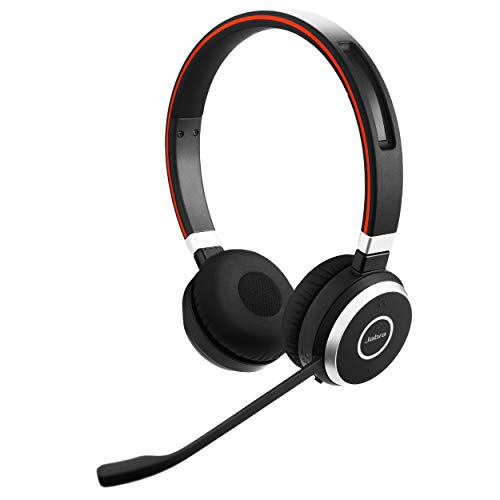
Labor Day Headphone Deals 2026: Which Are Real
Every Labor Day listing shows a struck-through price and a percentage. Almost none of them tell you what the thing actually cost last week, which is the only number that matters. We have been recording prices across this catalogue since late July — first weekly, now daily — so for once the claim can be checked against something other than the seller's own arithmetic. Three of the discounts live right now are real reductions against what we have actually observed. Several others are the price the product has been all along, wearing a badge.
Read full
Sennheiser HD 560S Review: Accuracy Is Not Enjoyment
Nearly everything else on this site is a consumer product: sealed, wireless, tuned to sound impressive in a shop and forgiving of a bad recording. The HD 560S is none of those things, deliberately. It is open at the back, so it leaks your music to the room and lets the room in. It is wired, so there is no battery, no app and no cancellation. And it is tuned to be accurate rather than pleasing, which means a badly mastered track sounds badly mastered. Every one of those is a reason most people should not buy it, and together they are why some people will not use anything else.
Read full
Poly Voyager 5200 Review: One Ear, On Purpose
Almost everything this site measures is the wrong lens for the Voyager 5200. It has one earpiece, so stereo is not a concept that applies. Its battery is quoted in single-figure hours next to gaming headsets claiming eighty. It has no active noise cancellation for the listener at all. Every one of those reads as a failure on a spec sheet and none of them is, because this is not a device for listening to anything. It is a device for being heard, outdoors, while moving, and it has been quietly doing that for one of the largest owner bases of any product in our catalogue.
Read full
SteelSeries Arctis Nova Pro Review: Never Charge It
Wireless gaming headsets compete on battery life the way phones compete on megapixels, and the numbers have reached the point of meaninglessness — eighty hours, a hundred, whatever the next one claims. SteelSeries went the other way with the Arctis Nova Pro. It ships two batteries and a base station that charges the spare while you use the other, so the runtime figure stops being a specification and becomes a question you never ask. That idea costs money, needs a desk, and is the reason to buy this over anything cheaper.
Read full
Google Pixel Buds Pro 2 Review: Bought for Gemini
These are the first Google earbuds this site has reviewed, and the reason is not that we were avoiding them. It is that the buying case is unusually narrow. On paper the Pixel Buds Pro 2 are a conventional flagship: active cancellation, spatial audio, a custom chip, a fit system nobody else has. In the market they are priced above Apple's current flagship while satisfying their owners less than either Apple's or Samsung's. What is left to justify the difference is Gemini, and whether that counts depends almost entirely on which phone is in your pocket.
Read full
Shokz OpenFit 2 Review: Same Price, Opposite Design
Shokz makes two flagship open-ear headphones and charges exactly the same for both. One is a bone conduction headband that vibrates your cheekbones. The other is a pair of air conduction earhooks that plays sound at your ears without covering them. Same money, opposite engineering, and no obvious signal about which is meant for you. The choice comes down to a single question, and it is not the one the marketing asks.
Read full
Turtle Beach Stealth 700 Gen 3 Review: Check the Box
Turtle Beach has a habit of selling one headset under two listings, and the Stealth 700 Gen 3 is the clearest case of it. There is a version labelled for Xbox and a version labelled for PlayStation, sitting a dollar apart. The interesting part is that the Xbox one is not the narrower choice — it is the wider one, covering every console the PlayStation version covers and one more besides. Almost nobody shopping for a PS5 headset would think to look at a box with Xbox on the front, which is exactly the problem.
Read full
Shokz OpenRun Pro 2 Review: Not Purely Bone Anymore
Every bone conduction headphone has the same weakness, and it is not a flaw anyone can engineer away: low frequencies need a sealed ear canal to build pressure, and the entire point of the format is leaving that canal open. Shokz has spent three generations narrowing the gap. With the OpenRun Pro 2 it stopped narrowing and changed the architecture instead, adding a conventional air conduction driver alongside the bone transducers. That works. It also means the thing you are buying is no longer quite what the category name says.
Read full
Turtle Beach Stealth 600 Review: 80 Hours, Two Versions
Most wireless gaming headsets under a hundred dollars ask you to charge them every second or third session. The Stealth 600 claims eighty hours, which would put it in a different category of ownership entirely — the kind you plug in monthly and otherwise forget. The specification is genuinely strong for the money. The thing that will actually decide whether you are happy is not on the specification sheet at all: there are two different headsets sold under this name, and picking the wrong one leaves you with hardware your console will not talk to.
Read full