Best Headphones for Podcasting: Closed-Back Only
Affiliate disclosure: this article contains Amazon affiliate links. If you buy through them, we may earn a commission at no extra cost to you. This never affects how we rank products — see how we review.
Comparison Table
| # | Product | Our Score | Price | Buy |
|---|---|---|---|---|
| 1 | beyerdynamic DT 770 PRO 80 Ohm Over-Ear Studio Headphones in Gray. Enclosed Design, Wired for Professional Recording and Monitoring Best Overall | 8.5/10 | $199.99 | Check Price on Amazon |
| 2 | Audio-Technica ATH-M30x Professional Studio Monitor Headphones, Black Runner-Up | 8.2/10 | $79 | Check Price on Amazon |
| 3 | Audio-Technica ATH-M20x Professional Studio Monitor Headphones, White | 8.1/10 | $59 | Check Price on Amazon |
| 4 | OneOdio Wired Over Ear Headphones Hi-Res Studio Monitor & Mixing DJ Stereo Headsets with 50mm Drivers and 1/4 to 3.5mm Jack for AMP Computer Recording Podcast Keyboard Guitar Laptop - Black Best Budget | 7.9/10 | $27.99 | Check Price on Amazon |
Prices as of September 25, 2026 — check Amazon for the latest price and availability.
Top Picks for You

beyerdynamic DT 770 PRO 80 Ohm Over-Ear Studio Headphones in Gray. Enclosed Design, Wired for Professional Recording and Monitoring
Closed over-ear headphones, ideal for professional recording and monitoring Perfect for studio and stage recordings thanks to their pure, high-resolution sound The soft, circumaural and replaceable velour ear pads ensure high wearing comfort Hard-wearing, durable and robust workmanship Made in Germany. Innovative bass reflex system Practical single-sided cable (3.0m cable) . Comfortable fit due to rugged, adjustable, soft padded headband construction
Price as of September 25, 2026 — check Amazon for the latest price.
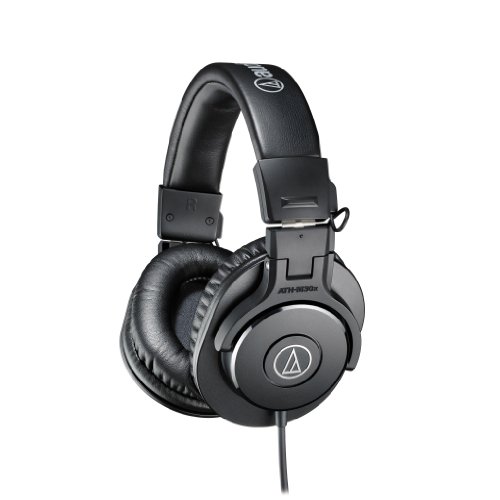
Audio-Technica ATH-M30x Professional Studio Monitor Headphones, Black
The step above the M20x, and the point in Audio-Technica's range where the tuning turns toward mixing. Same 40 mm driver construction, tuned for detail and midrange definition instead of low-end weight, which keeps vocals and instruments separable on dense material. Closed-back and circumaural with good isolation, and it collapses for transport, which the M20x does not. The cable is still fixed rather than detachable.
Price as of September 25, 2026 — check Amazon for the latest price.

Audio-Technica ATH-M20x Professional Studio Monitor Headphones, White
Audio-Technica's cheapest studio monitor, and the usual first step into real monitoring. Its 40 mm drivers are tuned for low-frequency weight, which makes it a comfortable headphone for tracking and long practice sessions rather than a revealing one for mixing. Closed-back, circumaural, and isolating enough for a room with a live source in it. The cable is fixed and exits one side; when it fails, the headphone is finished.
Price as of September 25, 2026 — check Amazon for the latest price.

OneOdio Wired Over Ear Headphones Hi-Res Studio Monitor & Mixing DJ Stereo Headsets with 50mm Drivers and 1/4 to 3.5mm Jack for AMP Computer Recording Podcast Keyboard Guitar Laptop - Black
OneOdio's wired over-ears are a home-studio utility pick: dual 3.5 mm and 6.35 mm jacks plug straight into audio interfaces and DJ gear without adapters, and the closed cups isolate decently for tracking. The tuning is bass-tilted rather than studio-flat, and they're bulky for outdoor wear — best treated as affordable desk monitors, not commuter headphones.
Limited time deal — ends September 26
Price as of September 25, 2026 — check Amazon for the latest price.
The One Rule
Closed-back. Always.
Open-back headphones leak sound outward by design. Sitting a few inches from a microphone, that leak is recorded — your guest's voice, faintly, underneath your own track. It cannot be removed cleanly afterwards, and it is there in every episode you publish.
This is the single most common equipment mistake in podcasting, and it usually happens because someone read that open-back headphones sound better. They do. They are also the wrong tool here, for a reason that has nothing to do with sound quality.
Everything else — impedance, tuning, brand — is negotiable. That one is not.
Two things worth saying before the recommendations, because they will save you more money than picking the right pair:
Headphones are the least important thing you will buy. A microphone in a soft-furnished room with mediocre headphones sounds far better than the reverse. If your budget is finite, spend it in that order.
You are doing two different jobs. While recording, headphones only need to be closed and comfortable — you are checking that audio exists and levels are sane. While editing, you need to hear detail in the midrange, where voices live. A pair that is fine for the first job can be limiting for the second.
beyerdynamic DT 770 PRO 80 Ohm Studio Headphones
The studio default, and it earns that. Closed, so nothing bleeds. Genuinely comfortable across the multi-hour sessions editing actually takes, with soft velour pads that are replaceable — the part that wears out first is a part you can buy rather than a headphone you replace.
The 80-ohm version is the one to get for this. It runs properly from an audio interface without needing a separate amplifier, unlike its 250-ohm siblings. If you are shopping this range, check the number on the box: the open-back DT 990 covered in our best wired headphones guide is a fine headphone and completely wrong for a podcast.
The 3-metre single-sided cable is a studio length. That is convenient at a desk and unwieldy anywhere else, and it is fixed rather than detachable. Our beyerdynamic DT 770 PRO review weighs it against the open-backed DT 990.
Check Price on Amazon · $199.99 as of September 25, 2026 — check Amazon for the latest price.
Audio-Technica ATH-M30x Professional Studio Monitor
The value pick for editing, and the one to buy if you do your own post-production. Its tuning favours detail and midrange definition, which is exactly the region voices occupy — it makes plosives, sibilance and room tone easier to notice while there is still time to fix them.
Closed-back, low impedance, comfortable enough for long sessions, and it collapses for transport if you record in more than one place.
It costs meaningfully less than the beyerdynamic and gives up build quality and pad replaceability to get there. Our M20x vs M30x comparison covers the choice between the two Audio-Technicas in detail.
Check Price on Amazon · $79 as of September 25, 2026 — check Amazon for the latest price.
Audio-Technica ATH-M20x Professional Studio Monitor
The right pick if you record and someone else edits, or if you are starting out and the budget is going into a microphone instead. It meets the one rule, it isolates well enough to monitor a live source, and it runs from anything.
Its tuning leans toward low-frequency weight rather than detail, which is comfortable over long stretches and slightly less revealing when you are hunting for problems in a take.
The cable is fixed, which is the usual limitation at this price and the thing most likely to end it.
Check Price on Amazon · $59 as of September 25, 2026 — check Amazon for the latest price.
OneOdio Wired Over Ear Headphones
The pick for guest headphones. If two or three people sit at your table, you need two or three pairs, and buying several cheap durable ones beats buying one expensive one.
It also carries both 3.5 mm and 6.35 mm jacks, so it plugs directly into an interface or mixer without an adapter — a small thing that matters when you are handing headphones to someone who did not bring their own.
The tuning is bass-forward rather than neutral, so it is a monitoring headphone rather than an editing one, and it is bulky. For guests, neither matters. Our OneOdio Pro-10 review sets out who the DJ features actually help.
Check Price on Amazon · $27.99 as of September 25, 2026 — check Amazon for the latest price.
How to Choose
You record and edit, and want to buy once: DT 770 PRO 80 Ohm.
You edit your own audio on a budget: ATH-M30x. Midrange detail is what editing depends on.
You only record, or you are buying a microphone first: ATH-M20x.
You need pairs for guests: OneOdio, as many as you have chairs.
You want to take calls on the same headset: a boom microphone is a different product — see best USB headset for work.
You want to spend more: spend it on the microphone and on soft furnishings before you spend it here. Our best studio headphones for home recording guide covers the upper end if you have already done both.
FAQ
Can I use open-back headphones for podcasting? Only if you are editing and never wearing them near a live microphone. While recording, they bleed into the track and that bleed is permanent.
Do I need studio headphones, or will normal ones do? Any closed-back headphone works for recording. Studio pairs help during editing because they flatter less, which makes problems easier to hear.
Does impedance matter for podcasting? Only in that a high-impedance pair needs an amplifier or interface to drive it. The 80-ohm DT 770 runs from a typical interface; a 250-ohm version would not, from a laptop.
Are wireless headphones acceptable? For editing, yes. For recording, no — Bluetooth adds latency, and hearing your own voice delayed makes speaking genuinely difficult.
How many pairs do I need? One per person at the table. Guests need to hear themselves and the remote participants, and a shared pair is not a solution.
What matters more than headphones? The microphone, and the room. A treated corner and a decent mic with cheap headphones beats the reverse every time.
For the wider category — wireless and wired, budget to flagship — see our best bluetooth headphones guide.
Verdict
The DT 770 PRO 80 Ohm is the one to buy if you are buying once. Closed, comfortable across long edits, and repairable when the pads flatten — get the 80-ohm version, not the 250.
The ATH-M30x is the sensible cheaper choice if you edit your own audio, because midrange detail is the property editing rests on. The ATH-M20x is enough if you only record.
The OneOdio is what you buy several of, for the people sitting across from you.
Whichever you pick, check one thing on the box before you buy: closed-back. That single word decides whether your recordings have a fault in them that no amount of editing will remove.
Written by
HeadsetAtlas Editorial TeamOur recommendations are research-driven: we analyze technical specifications, aggregate thousands of verified user reviews, and cross-reference expert sources to score every product. Read our full review methodology →