Best Headphones for Electronic Drums: 4 Wired Picks
Affiliate disclosure: this article contains Amazon affiliate links. As an Amazon Associate, we earn from qualifying purchases at no extra cost to you. This never affects how we rank products — see how we review.
Comparison Table
| # | Product | Our Score | Price | Buy |
|---|---|---|---|---|
| 1 | Sennheiser HD 280 Pro Closed-Back Studio and Live Monitoring Headphones Best Overall | 8.3/10 | $79 | Check Price on Amazon |
| 2 | Audio-Technica ATH-M30x Professional Studio Monitor Headphones, Black Runner-Up | 8.2/10 | $79 | Check Price on Amazon |
| 3 | Sony MDR7506 Professional Large Diaphragm Headphone | 8.1/10 | See Amazon | Check Price on Amazon |
| 4 | Audio-Technica ATH-M20x Professional Studio Monitor Headphones, Black Best Budget | 7.9/10 | $49 | Check Price on Amazon |
Prices as of November 27, 2026 — check Amazon for the latest price and availability.
Top Picks for You

Sennheiser HD 280 Pro Closed-Back Studio and Live Monitoring Headphones
Dynamic, closed ear headphones with up to 32 dB attenuation of outside sound Lightweight and comfortable, ergonomic design, Cord Length 3.3 9.8 feet Coiled Extended frequency response and warm, natural sound reproduction Around the ear design with padded earcups Earpads, headband padding, and audio cord are easily replaceable, ensuring long life Connectivity technology : Wired Dynamic, closed ear headphones with up to 32 dB attenuation of outside sound Lightweight and comfortable, ergonomic design Extended frequency response and warm, natural sound reproduction Collapsible earpieces for compact transport Earpads, headband padding, and audio cord are easily replaceable, ensuring long life
Price as of November 27, 2026 — check Amazon for the latest price.
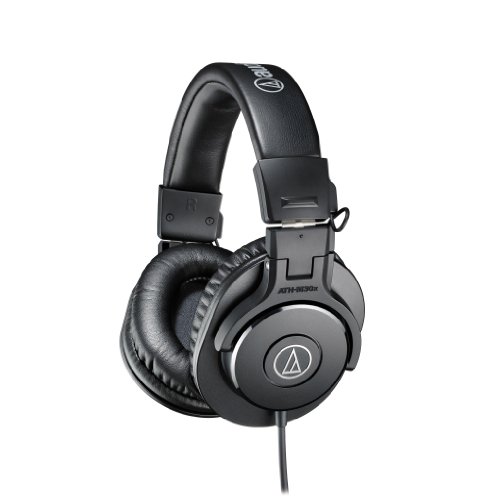
Audio-Technica ATH-M30x Professional Studio Monitor Headphones, Black
Advanced build quality and engineering 40 millimeter drivers with rare earth magnets and copper clad aluminum wire voice coils Tuned for enhanced detail, with excellent mid-range definition Circumaural design contours around the ears for excellent sound isolation in loud environments Convenient single side cable exit Collapsible for space saving portability
Price as of November 26, 2026 — check Amazon for the latest price.

Sony MDR7506 Professional Large Diaphragm Headphone
Neodymium magnets and 40 millimeter drivers for powerful, detailed sound.Specific uses for product : Professional audio system,Home audio system Closed ear design provides comfort and outstanding reduction of external noises 9.8 foot cord ends in gold plated plug and it is not detachable; 1/4 inch adapter included Folds up for storage or travel in provided soft case Frequency Response: 10 Hertz to 20 kilohertz These large diaphragm, foldable headphones feature a rugged construction, a secure, highly effective closed ear design Connectivity technology : Wired
Price as of November 26, 2026 — check Amazon for the latest price.

Audio-Technica ATH-M20x Professional Studio Monitor Headphones, Black
Advanced build quality and engineering; Designed for studio tracking and mixing 40 mm drivers with rare earth magnets and copper clad aluminum wire voice coils Tuned for enhanced low frequency performance Circumaural design contours around the ears for excellent sound isolation in loud environments Convenient single side cable exit
Price as of November 26, 2026 — check Amazon for the latest price.
Our Shortlist
- Sennheiser HD 280 Pro — isolation-first pick. Sennheiser quotes up to 32 dB of passive ambient attenuation. The coiled cable and included 6.3 mm adapter suit a module near your seat, though its published clamping force and 285 g weight deserve a fit check.
- Audio-Technica ATH-M30x — straight-cable pick. A 3 m cable, 6.3 mm screw-on adapter, folding design and pouch make it a tidy choice when the module sits farther away.
- Sony MDR-7506 — coiled-cable alternative. Sony lists a closed design, coiled cable and 3.5/6.3 mm plug arrangement; choose it if you prefer that cable behavior and can try its earcup fit.
- Audio-Technica ATH-M20x — simple budget pick. A closed cup, 3 m fixed cable and included 6.3 mm snap-on adapter cover the essentials without paying for portability extras.
These are headphones, not electronic-drum triggers or hearing protectors. The selection is based on manufacturer specifications and exact Amazon offers checked November 10, 2026. We have not measured their sound, noise attenuation, latency, fit or loudness from any particular drum module.
Start at the Module's Headphone Jack
Before comparing drivers, look at the jack marked PHONES or HEADPHONES on your own module. Yamaha's DTX-PRO specification lists a standard stereo phone jack; the DTX-PROX lists both standard and mini stereo headphone jacks. Those examples show why the connector is a module-specific question. Do not assume every kit has the same socket.
| What to check | Why it changes the purchase |
|---|---|
| 6.3 mm or 3.5 mm stereo headphone socket | All four selected headphones can use 3.5 mm and include or integrate a 6.3 mm adapter, but the correct plug must seat securely. |
| Cable run from module to your head | A 3 m straight cable reaches a distant module but needs routing away from pedals and sticks; a coiled cable reduces loose length but can tug. |
| Pad noise and seal | A closed-back cup can reduce how much stick and pad noise competes with the module, but glasses and head shape change the seal. |
| Headphone volume | Start low and raise it only as needed; isolation is no excuse to mask a poor seal with excessive level. |
Use the module's headphone output, not a line output meant for an amplifier. If the connector or signal routing is unclear, consult the exact module manual. An adapter changes plug size, not the electrical output or the sound of a poorly seated connection.
Sennheiser HD 280 Pro
Choose this if hearing the kit over physical pad noise is your first priority. Sennheiser quotes up to 32 dB of ambient attenuation for the closed, over-ear HD 280 Pro. That is a manufacturer maximum, not HeadsetAtlas's result on a mesh or rubber-pad kit. It supports the direction of the recommendation, but the actual seal and room noise decide what you hear.
The product specification lists a 3.5 mm plug, 6.3 mm adapter and a coiled cable extending from about 1.3 m to 3 m. Its nominal impedance is 64 ohms and weight without the cable is 285 g. The same document gives 6 N contact pressure. Some players may appreciate the firm seal; others may feel it against glasses after a practice session. Try the exact fit rather than calling it universally comfortable.
The coiled cable is useful when the module is close to the throne, but its pull can also catch your arm if it crosses the playing area. Route it behind the kit before the first take. Our HD 280 Pro review covers the model and replacement-part questions in more detail.
Check Price on Amazon · $79 as of November 26, 2026 — check Amazon for the latest price.
Audio-Technica ATH-M30x
Choose the M30x for a long, predictable cable and a foldable studio design. Audio-Technica's technical document lists closed-back cups, a fixed 3 m straight cable, 47-ohm impedance, 220 g weight without cable, a 6.3 mm screw-on adapter and a protective pouch. The long lead can reach a module placed to the side of a rack without stretching a coil.
Its straight cable is also its main floor hazard. Keep spare length off pedals and secure it where it cannot pull the module or headphone plug. The M30x folds for storage, but do not assume the fixed lead can be replaced as easily as a detachable one. The manufacturer's manual distinguishes the fixed M20x/M30x cables from the detachable cables supplied with higher M-series models.
The ATH-M30x review explains its studio role. The M20x versus M30x comparison is useful if the lower-cost sibling below is tempting.
Check Price on Amazon · $79 as of November 26, 2026 — check Amazon for the latest price.
Sony MDR7506 Professional Large Diaphragm Headphone
Choose the MDR-7506 if you want another documented, closed-back monitor with a coiled lead. Sony's professional product page specifies a closed design, 63-ohm impedance, a 3.5/6.3 mm Unimatch plug arrangement and a protective pouch. Its manual lists a roughly 1.2 m coiled cable that stretches to about 3 m and approximately 230 g weight without cable.
That cable may keep extra length away from the pedals when the drum module is nearby. It can also tug when stretched across a wide rack, so check the route in your seated playing position. Sony does not publish a directly comparable attenuation figure on the cited page, and we have no measured isolation comparison with the HD 280 Pro. Choose on connector, cable behavior, fit and the current offer rather than an invented winner in sound quality.
Audio-Technica ATH-M20x
Choose the M20x when the basic connection matters more than folding or a pouch. Audio-Technica specifies a closed-back design, 47-ohm impedance, 190 g weight without cable, a fixed 3 m straight lead and a 6.3 mm snap-on adapter. That is enough to connect to many standard stereo module sockets once you verify your own jack.
It lacks the M30x's listed pouch and screw-on adapter. The lighter number is useful to know, but it does not establish better comfort or a better seal. If the cable will stay permanently on a practice kit, the M20x is the uncomplicated choice; if you pack and unpack often, the M30x's folding and pouch may justify the step up. Our M20x review covers its broader use outside drums.
Check Price on Amazon · $49 as of November 26, 2026 — check Amazon for the latest price.
How to Set Up a Fair Trial
Plug into the headphone socket with the correct adapter and set the module volume low before putting the headphones on. Play kick, snare, hi-hat and cymbal voices at your usual dynamics, then listen for whether physical pad hits overpower the module. Adjust the earcups around glasses if you wear them. A loose seal can matter more than the difference between two published frequency ranges.
Sit at your normal throne height and turn through the full kit while the cable is connected. It should not reach across a pedal, stick path or moving stand. If a coiled lead is at full stretch, move the module or route the cable differently; if a straight lead pools on the floor, secure the excess. Test for at least one normal practice session so pressure and heat have time to show up.
Finally, make a short recording or ask another listener if you are also using the kit's line outputs. The headphone output and recording path may carry different mixes or levels depending on the module. The headphone itself cannot fix routing settings in the drum brain.
FAQ
Do electronic drums require special headphones?
No dedicated label is required for the connection. A compatible wired stereo headphone with a suitable plug can work; a closed-back design is useful when you want less pad noise competing with the module. Verify the exact module's headphone jack and output behavior.
Why not use Bluetooth headphones?
A wired path avoids adding a Bluetooth connection and its possible delay to the timing between a hit and what you hear. If your module offers wireless audio, check whether that feature is for sending music into the module or sending the drum sound out to headphones; they are different functions.
Will a 6.3 mm adapter change the sound?
A properly seated stereo adapter changes connector size. It does not convert a line output into a headphone output or guarantee the same level from every module.
Which cable is better around a kit?
The HD 280 Pro and MDR-7506 have coiled leads; the M30x and M20x have 3 m straight leads. Choose the one that reaches your module without crossing a pedal or pulling the plug.
Verdict
The HD 280 Pro leads if a strong, documented passive-isolation claim is your priority and its firmer fit suits you. The M30x is a good straight-cable choice, the MDR-7506 offers another coiled studio option, and the M20x covers the essential connection at the simpler end. Check your module's jack and your cable route first, then choose the fit you can actually wear through a session. None of these specifications replaces a trial with your own kit.
Written by
HeadsetAtlas Editorial TeamOur recommendations are research-driven: we analyze technical specifications, aggregate thousands of verified user reviews, and cross-reference expert sources to score every product. Read our full review methodology →