The Audio Archive
Explore our complete collection of curated insights, technical reviews, and buying guides.
Best Open-Ear Headphones for Running (2026)
For running on roads, open-ear headphones are the safest choice you can make: your ears stay open, so you hear cars, cyclists and other runners while you listen. That awareness is the whole point, and it's why runners have moved to open-ear in numbers. These five span $27 to $180 and cover both ways of doing it — bone conduction, which sends sound through your cheekbones, and air conduction, which places a tiny speaker just outside your ear. Both keep you aware; they differ on sound and fit, and the right one depends on how and where you run.
Read full
JBL Tune 720BT Review: 76 Hours, One Big Catch
The JBL Tune 720BT is a budget wireless over-ear built around one headline number: 76 hours of battery, which is a lot even by the generous standards of this category. Add JBL's familiar bass-forward sound, app EQ and a light, foldable design and you have a headphone that's genuinely easy to recommend — at the right price. That last part is the catch, because right now it isn't at the right price, and this review is about both the headphone and the timing.
Read full
Nothing Ear (a) vs CMF Buds Pro 2: Brand vs Sub-Brand
This is a rare comparison where a brand competes with itself. The Nothing Ear (a) is Nothing's affordable earbud at $79; the CMF Buds Pro 2 is made by CMF, Nothing's own budget sub-brand, at $49. On paper the cheaper one wins more rows than it should — higher ANC figure, dual drivers, a physical control dial — which raises an honest question: does the extra thirty dollars for the parent brand buy anything real, or does the sub-brand quietly beat it?
Read full
Best Bone Conduction Headphones (2026): 5 Picks
Bone conduction headphones send sound through your cheekbones instead of into your ear canal, which leaves your ears completely open. That's the whole appeal: you hear traffic, other runners and your own footsteps while you listen, which makes it the safest way to train on roads. It's also why the sound is thinner than any in-ear or over-ear design — an open ear can't be pressurised, and bass comes from pressure. This list is honest about one thing up front: bone conduction is a category Shokz effectively owns, and every pick here is a Shokz, because nothing else at this level competes on fit, reliability or track record.
Read full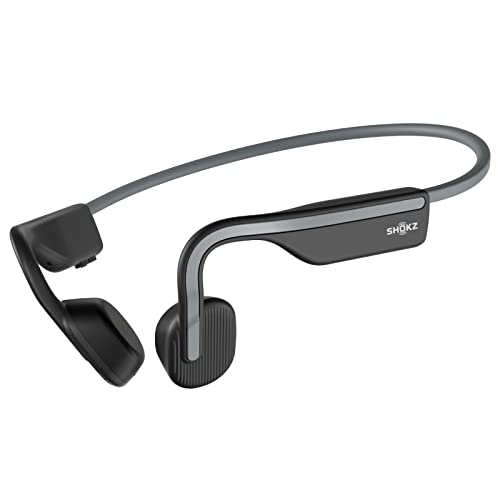
Best Wired Gaming Headset (2026): 5 No-Battery Picks
A wired gaming headset never dies mid-match, never needs pairing, and never adds the latency that wireless can. For a desk — which is where most gaming happens — that isn't a compromise; it's the better choice, and it's cheaper too. These five span $20 to $93 and cover every wired setup from a first headset to a streamer's boom mic, and the pick comes down to your platform, your budget, and whether the microphone is the point.
Read full
Best Noise Cancelling Earbuds Under $100 (2026)
Under $100 is the sweet spot for noise-cancelling earbuds. Below $50 you get real cancellation with a few corners cut; above $100 you're paying for polish rather than the feature itself. In this bracket the corners mostly disappear: adaptive ANC rated to 50dB, hi-res Android codecs, multipoint and app EQ all show up for well under a hundred dollars. These five span the whole range from $27 to $99, and each earns its place for a different reason — so the pick depends less on which is best and more on what you actually want.
Read full
EarFun Air Pro 4 vs CMF Buds Pro 2: Budget ANC
Budget noise-cancelling earbuds used to mean settling. These two don't. The EarFun Air Pro 4 and the CMF Buds Pro 2 both quote 50dB of adaptive cancellation, both do multipoint, both support hi-res Android codecs, and both cost around fifty dollars — a specification that would have been flagship money a couple of years ago. They're close enough that the decision comes down to a handful of specific differences rather than one being better than the other, so this compares them on exactly those.
Read full
Shokz OpenSwim Pro Review: Music Underwater, For Real
This site has said the same thing in two different reviews: you cannot stream music while swimming, because Bluetooth does not travel through water, no matter how waterproof the headphone is. The Shokz OpenSwim Pro is the product that answers that limitation directly — not by making Bluetooth work underwater, which is impossible, but by storing 32GB of music onboard so it doesn't need Bluetooth at all once you're in the pool. It is a specialist device with a specialist price, and this review is about whether that specialism is worth $230 to you.
Read full
EKSA E900 Pro Review: A $50 Wired Gaming Headset
The EKSA E900 Pro is a wired gaming headset that costs about forty dollars and behaves like it costs more — a detachable microphone, two removable cables, virtual 7.1 surround and, unusually for the price, a two-year warranty. Wired is the whole idea here: no battery to die mid-session, no pairing, no latency. This review is about what that forty dollars actually buys, and the two things about the surround-sound claim worth understanding before you count on it.
Read full
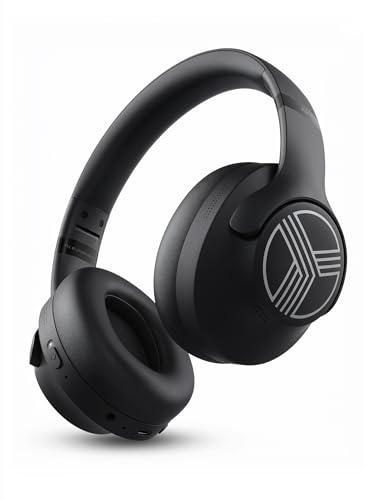
TREBLAB Z2 vs Soundcore Space One: Features or Quiet
These two budget over-ear headphones sit twenty dollars apart and pull in opposite directions. The TREBLAB Z2 spends its budget on features — multipoint, a wired backup, a gaming mode, 58 hours of battery. The Soundcore Space One spends almost all of it on one thing: cancellation, which is the best you can get under $100. Neither is trying to be the other, so this comparison comes down to a single honest question — do you want the longest list of things a headphone can do, or the quietest commute your money can buy?
Read full